SEO for Construction Companies: Turn Traffic Into Leads
Two contractors, same city, same skill level. One's phone rings all week. The other guy refreshes his inbox and waits there. The difference isn't luck, and it is not even “better work,” it’s more like who Google decided to surface first.
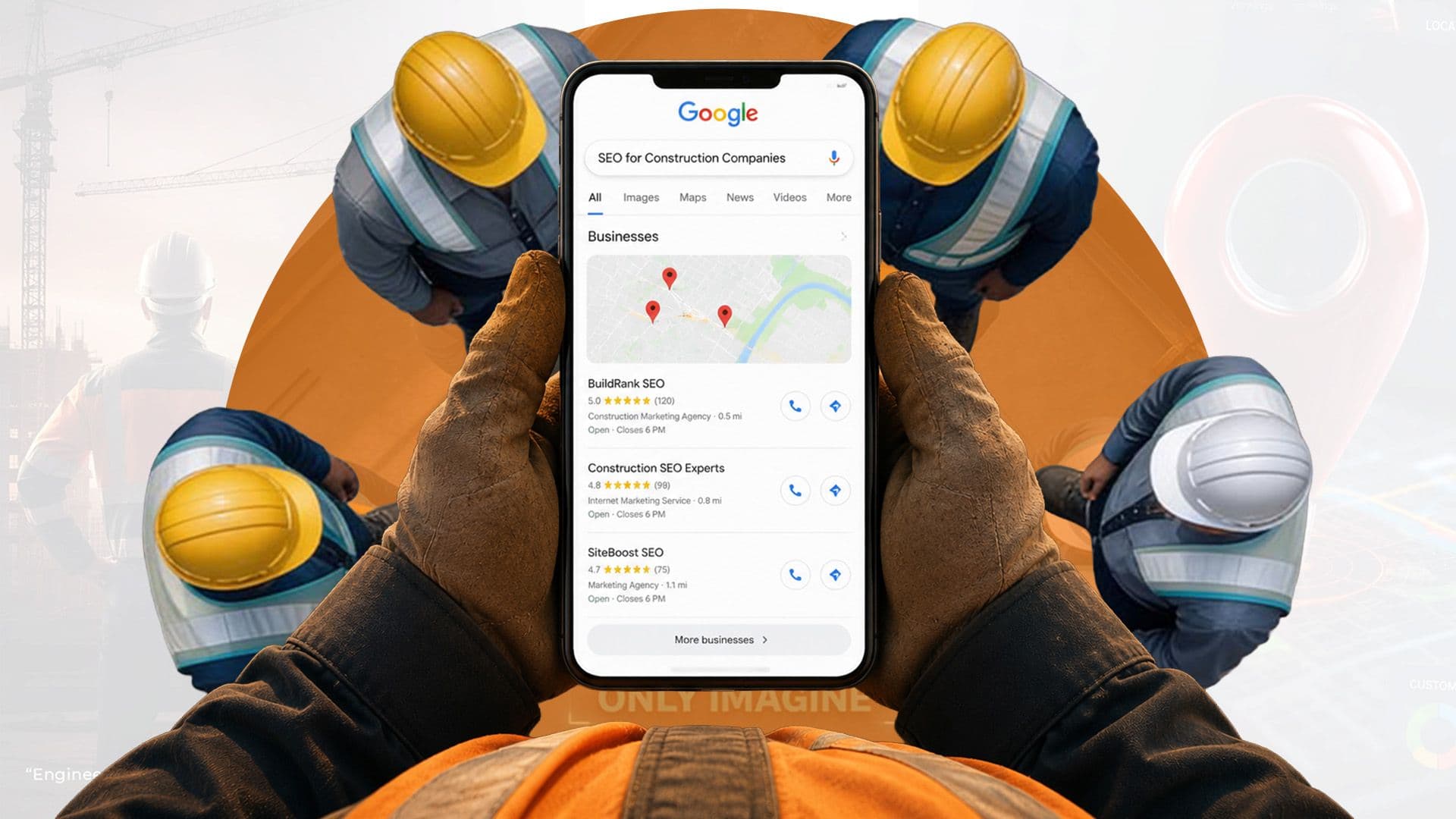
Every hour, homeowners and business owners are tapping urgent, ready-to-hire searches into their phones, and somehow just one contractor gets the click.
This blog is your roadmap to becoming the contractor clients find first. Learn SEO for construction companies built around how people search today.
Key Takeaways
- Put your construction business in front of customers ready to hire.
- Local searchers often take action, like calling, visiting, or buying within a day.
- Your Google Business Profile can be as important as your website for local visibility.
- Dedicated service and location pages outperform one generic services page.
- Reviews and consistent listings help Google trust and rank your business.
- Calls and signed jobs are the real scoreboard, not raw traffic numbers.
Why Construction Companies Need SEO to Generate Leads
Nobody browses for a contractor for fun. A pipe bursts, a roof fails, or an office needs expansion. Suddenly, they need trusted help nearby and they need it now.
That urgency is what makes construction such a local, high stakes search category. Most people call exactly one company and move on.
If you're invisible in that moment, the job simply goes elsewhere. Construction SEO exists to make sure that moment belongs to you.
Core Strategies of SEO for Construction Companies to Attract and Convert Construction Leads
Getting noticed is just half of it. The other half is more like turning that visibility into actual calls, inquiries, and then real signed contracts. So yeah, it’s not only “being seen”; it’s making it count in a practical sense.
Here's the core strategy stack that makes both happen.
1. Build Your SEO Strategy With Keyword Research
Getting found consistently isn't about one trick. It's a system, like keywords, listings, pages, content, and trust signals working together. Here's how each piece fits.
Target Service-Specific Keywords
Start with the exact services you offer, such as “kitchen remodeling,” “commercial roofing,” or “foundation repair.” These high intent searches target people who already know what they need and are closer to hiring.
Target Location-Specific Keywords
A strong keyword without a location is only half the job. Pair your services with the cities or neighborhoods you serve, like “roofing contractor Islamabad,” to attract relevant local customers. Precision beats reach in local search.
Prioritize High Intent, Ready-to-Hire Terms
Some searches show clear urgency, like “emergency roof repair” or “get a quote for home addition.” These are decision stage searches, so prioritize them because the person may be minutes away from calling.
2. Make Your Google Business Profile Work Overtime
For many prospects, your Google Business Profile comes first, shaping how they see your business before your website.
- Provide complete information on your services, hours, service areas, and business details.
- Appearing in the Local Pack helps capture high-intent local searches.
- Stay visible with fresh project photos, updates, and consistent posts.
3. Stop Relying on One Generic Services Page
A single "our services" page trying to cover five cities and ten trades is fighting an uphill battle. Split it apart.
Create a dedicated page for each service location combination, matching the visitor’s exact search intent. Answer their needs clearly and guide them toward the next step or action.
Just don't take a shortcut here. Changing only the city name across identical pages can create near-duplicate content. This can weaken the visibility and rankings of all those location pages.
Add a real local project, area-specific permit detail, or genuine local insight to each page. Show practical details that prove your company actually works in that location.
4. Turn Website Visitors Into Actual Leads
A fast loading, mobile friendly site is table stakes, not a bonus. A lead-generating website makes taking action simple and effortless. Keep one visible phone number and a clear quote request button.
Avoid complex menus and extra steps between interest and contact. Make it easy to reach you, as every extra click can cost a potential lead to a competitor.
5. Publish Content That Builds Trust Before the Call
People research bigger decisions before committing. Clear guides on project timelines, realistic costs, permits, and seasonal maintenance answer key questions.
They help prospects understand what to expect before contacting your business. This builds trust and brings more informed, high intent leads. Clear, well structured answers are also easier for AI search tools to understand.
This helps your content appear in both traditional search and AI generated summaries.
6. Let Reviews Do the Convincing for You
A five-star pattern of recent, detailed reviews tells both Google and future clients the same thing: that this company delivers. So, build that pattern deliberately.
- After the job is wrapped up, ask the customer to leave a review.
- Keep it calm and professional when you reply, even if it’s positive, or especially if the feedback is negative.
- Also stay on the move on Google, Yelp, and those niche industry sites so that nothing gets lost or unnoticed.
7. Keep Your Business Listings Airtight
Ensure every directory shows the same business name, street address, and phone number. Small NAP differences can confuse search engines and gradually hurt local rankings.
Build stronger authority with backlinks from suppliers, trade associations, and local press. Prioritize quality links over relying on low quality directory listings.
8. Measure What Actually Pays the Bills
Traffic charts look nice in a report. They don't pay for materials or payroll. Shift your attention to numbers tied directly to revenue:
- Calls and form submissions generated straight from search.
- Direction requests and profile views on your Google Business Profile.
- The percentage of visitors who actually become qualified leads.
- Where you rank in the map pack for the terms that matter most.
How Long Does Construction SEO Take to Show Results?
You can expect the first real momentum around the 3 to 4 month mark, then it’s slowly building through months 6 to 12.
Less competitive service areas often start climbing quicker, while the crowded markets usually need more patience, or something close to that. With paid ads, it’s different, and once you stop paying, the ads stop too.
SEO keeps doing its thing in the background because the value keeps stacking over time, not just while the budget is active. And yeah, it can keep pulling in organic traffic and even leads well after that first rush of work is finished.
Common SEO Mistakes Construction Companies Make
A handful of avoidable habits are responsible for most of the missed leads out there.
- Leaning on one catch-all services page instead of dedicated location pages.
- Letting the Google Business Profile go stale or stay incomplete.
- Collecting reviews but ignoring the negative ones.
- Letting business details drift out of sync across directories.
- Shipping a slow, clunky site that loses visitors before they convert.
- Celebrating traffic spikes instead of tracking calls and signed jobs.
Conclusion
The contractors who win aren't always the ones working hardest to get noticed.
They’re the ones Google already trusts enough to rank first.
Trust is built through SEO for construction companies, like strong keywords, local visibility, targeted pages, and client proof. Together, these signals help turn searchers into confident customers.
Get the fundamentals right and avoid common SEO mistakes. Become the business customers call first, not the one waiting for leads.

Usama Shareef
Usama Shareef is the COO of Mahraj Technologies, bringing strong expertise in SEO content writing, software QA, and development testing. He specializes in delivering high-quality digital solutions with a focus on performance, accuracy, and scalable growth