Local SEO for Law Firms: Generate More Client Leads
After a sudden car accident, a worried victim reaches for their phone and searches “car accident lawyer near me.” Three law firms show up almost instantly. They call the first one.
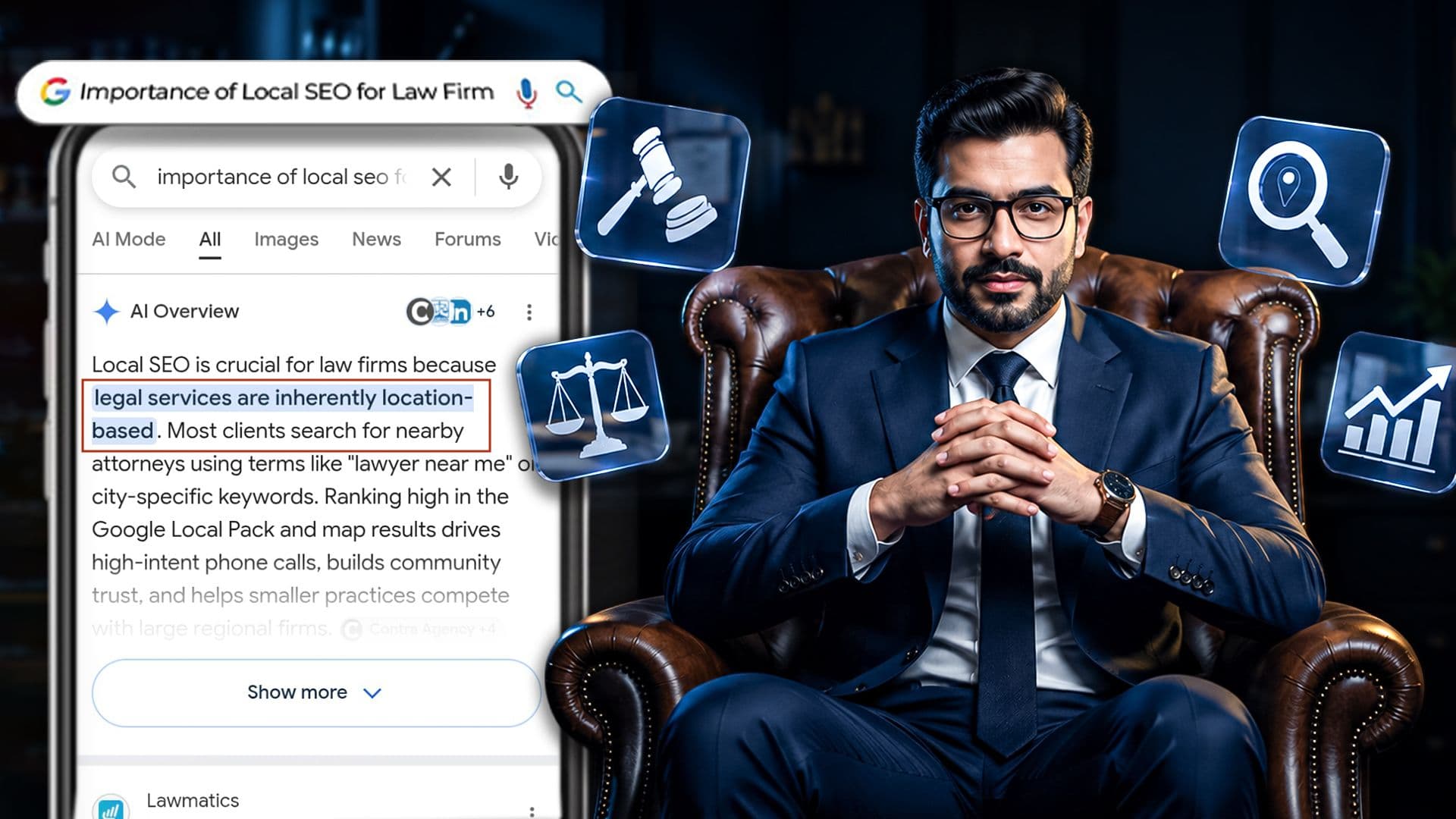
That's the entire sales cycle for most legal leads today, won or lost in under a minute. This blog explains how local SEO for law firms works. Learn how to win more clients when they’re ready to take action.
Key Takeaways
- Local SEO connects your firm with clients actively seeking legal help.
- Local rankings depend on relevance, distance, and prominence.
- A strong Google Business Profile can generate more legal leads.
- City and practice-area pages capture high-intent searches.
- Reviews strengthen trust and local search performance.
- Avoiding SEO mistakes protects your marketing investment.
Why Local SEO Is Essential for Law Firm Lead Generation
Most legal clients don't search by firm name. They search by need and location, like "divorce attorney near me" or "personal injury lawyer in Islamabad.” If your firm isn’t showing up, some competitor gets the call instead.
With local SEO, your law office lands right in front of people actively looking for legal help. It’s like you get seen while they’re still searching.
Paid ads stop when your budget runs out. Local SEO can keep attracting leads through strong rankings while gradually lowering your cost per client.
How Does Google Local Search Connect Law Firms With Potential Clients?
Google considers three main factors when ranking law firms locally. Learn them to target your SEO efforts effectively.
Relevance
Relevance is how closely your firm matches the search. A complete Google Business Profile with accurate practice areas helps Google match you to the right queries.
Distance
Distance is basically how near your office feels to the person searching. You can’t really control it, but if your other signals are really solid, you still can hold your ground, even if you’re not the closest outfit.
Prominence
Prominence is basically how recognized and trusted your firm comes across on the internet. Reviews, mentions, and backlinks all sort of build into that signal, and honestly it’s often the one area firms can influence the most.
Top 8 Local SEO Strategies that Law Firms Need for More Leads
A polished website isn’t enough to rank locally. Local SEO for law firms requires multiple strategies working together.
1. Google Business Profile Optimization
Your Google Business Profile is usually the very first thing potential clients run into, sitting above your website in local results like a highlight or something.
Go ahead and fill in everything properly, with no guesswork, like fields, practice areas, hours, service locations, and attorney bios, plus photos too. Post regularly and keep your profile information updated.
- Choose specific categories, such as “Personal Injury Attorney,” rather than “Lawyer.”
- Use authentic office and team photos instead of stock images.
- Enable messaging and Q&A to capture leads quickly.
- Share case wins, updates, or events at least twice monthly.
An optimized profile strengthens relevance and boosts local visibility. It can put your firm in the Map Pack before prospects visit your website.
2. Local Keyword Research for Legal Services
Not every legal keyword converts equally. Research how real clients search by combining practice area keywords with local terms. Like, target terms like “estate planning lawyer” + your city to reach clients ready to call.
- Capture client ready searches such as “DUI lawyer near me” or “Islamabad family lawyer.”
- Study competitor keywords to find gaps in your own coverage.
- Include long tail, question based searches clients ask before hiring.
This keeps your content aligned with what prospective clients are typing, not just what sounds impressive.
3. Practice Area and Location Page Optimization
Generic “our services” pages, they just don’t tend to rank that well. For law firms, it’s usually better to have a dedicated page for every single practice area and also each office location.
Each page should target relevant clients and searches for that specific combination. Each page should answer real client questions, list relevant credentials, and include a clear call to action.
This structure helps clients and Google understand your full range of services. It also helps multi-location firms rank in every city they genuinely serve, not just their headquarters.
4. Local Citation and Directory Management
Your firm’s name, address, and phone number really should match across every legal directory. Try to keep it consistent on Avvo, Justia, and yes, your own website too.
When citations are inconsistent, it can confuse Google, and honestly, it can weaken your local rankings over time, like in a slow, sneaky way. Even strong SEO efforts can suffer when your business information doesn’t match.
- Audit and fix listings across key legal directories.
- Claim and verify Avvo, Justia, FindLaw, and similar profiles.
- Update citations promptly after contact or address changes.
5. Client Review and Reputation Management
Reviews influence prominence, one of Google’s three core local ranking factors. They also build trust with potential clients before they ever call.
Set up a steady ethical routine for gathering real reviews. And don’t ignore the tough feedback either. Instead, reply with care to that negative stuff as part of your day to day strategy.
- Encourage reviews after positive client outcomes.
- Reply to all reviews with professionalism and speed.
- Check review platforms weekly to spot concerns early.
6. Local Link Building for Authority
Backlinks from trusted local sources can strengthen your law firm’s authority. These include bar associations, chambers of commerce, sponsorships, and local news coverage.
Those links show Google that your law firm is a legitimate part of the local legal community. They build credibility and authority, rather than making your website look isolated or unknown.
Quality matters more than link volume. One authoritative local mention may be worth more than dozens of cheap directory links.
7. Technical SEO and Legal Schema Markup
Ensure your site loads quickly, works well on mobile, and has a clear structure. The LegalService and Attorney schema helps Google understand your services, location, and qualifications.
That way, your law firm can show up better in search results, sometimes even with rich snippets, which is pretty helpful.
- Fix the broken links and smooth out the slow pages, plus sort out those mobile display issues as well.
- Use secure HTTPS hosting and optimize your site structure for search crawlers.
- Also add structured data, like for attorneys, reviews, and FAQs. So search engines can understand it better.
Local Content Marketing
Answer local legal questions through helpful blogs, FAQs, and guides. Focus on court processes, filing deadlines, and state specific client needs.
Content addressing situations like what to do after an accident can build authority and attract qualified local prospects.
It strengthens EEAT signals and builds Google’s confidence in your site. It also positions your firm as a trusted, knowledgeable local resource.
How to Measure Whether Your Local SEO Is Actually Working?
Rankings alone don't pay the bills, signed clients do. Track these metrics to know if your investment is paying off.
- Phone calls generated directly from your Google Business Profile.
- Form submissions and consultation requests from location pages.
- Click-to-call rate from mobile searches.
- Number of new client reviews per month.
- Ranking position for your top practice-area and city keywords.
- Conversion rate from website visitor to booked consultation.
Check these numbers monthly to see what’s working. Adjust quickly before weak areas start costing you leads.
Common Local SEO Mistakes Law Firms Should Avoid
Even firms investing in local SEO strategies for law firms often lose leads to avoidable errors. Watch for these common mistakes.
- Avoid incomplete or outdated Google Business Profile details.
- Build separate pages for each legal practice area.
- Address negative reviews quickly and professionally.
- Maintain consistent NAP information everywhere.
- Add relevant schema markup to improve search understanding.
- Create unique content with strong local relevance.
- Focus on service areas you actually cover.
Why Choose Us for Local SEO for Law Firms?
Not every agency gets how the legal industry works with compliance rules, client urgency, and the whole trust requirement thing. Here’s what makes our way of doing it different, even if it sounds similar on paper.
- We have a proven record with law firms in more than a few practice areas.
- Our strategies lean on ethical, bar-compliant marketing, like it’s not optional.
- We do transparent reporting tied to calls and actual consultations, not only the usual “rankings” talk.
- There are dedicated local SEO specialists here, not some generic marketing crew that never really learns your market.
- We keep refining your SEO strategy over time, not just setting it up and walking away.
Conclusion
Winning local legal leads is not really about luck; it’s mostly about being seen at the right moment, even if it feels like timing.
A solid approach to local SEO for law firms puts your practice in front of potential clients when they're actively looking for legal help. It also creates those trust signals that turn local visibility into actual consultations.
Try to stick with the core basics in here and sidestep the usual mistakes that quietly limit results. Do that consistently, and your firm can outrank the competitors in the places that count the most.

Usama Shareef
Usama Shareef is the COO of Mahraj Technologies, bringing strong expertise in SEO content writing, software QA, and development testing. He specializes in delivering high-quality digital solutions with a focus on performance, accuracy, and scalable growth