How to Choose the Right Local SEO Agency for Healthcare?
Great care alone doesn't fill waiting rooms anymore; visibility does. Somewhere right now, a patient is searching for your specialty on Google. The practice that appears first can win the appointment, not necessarily the better provider.
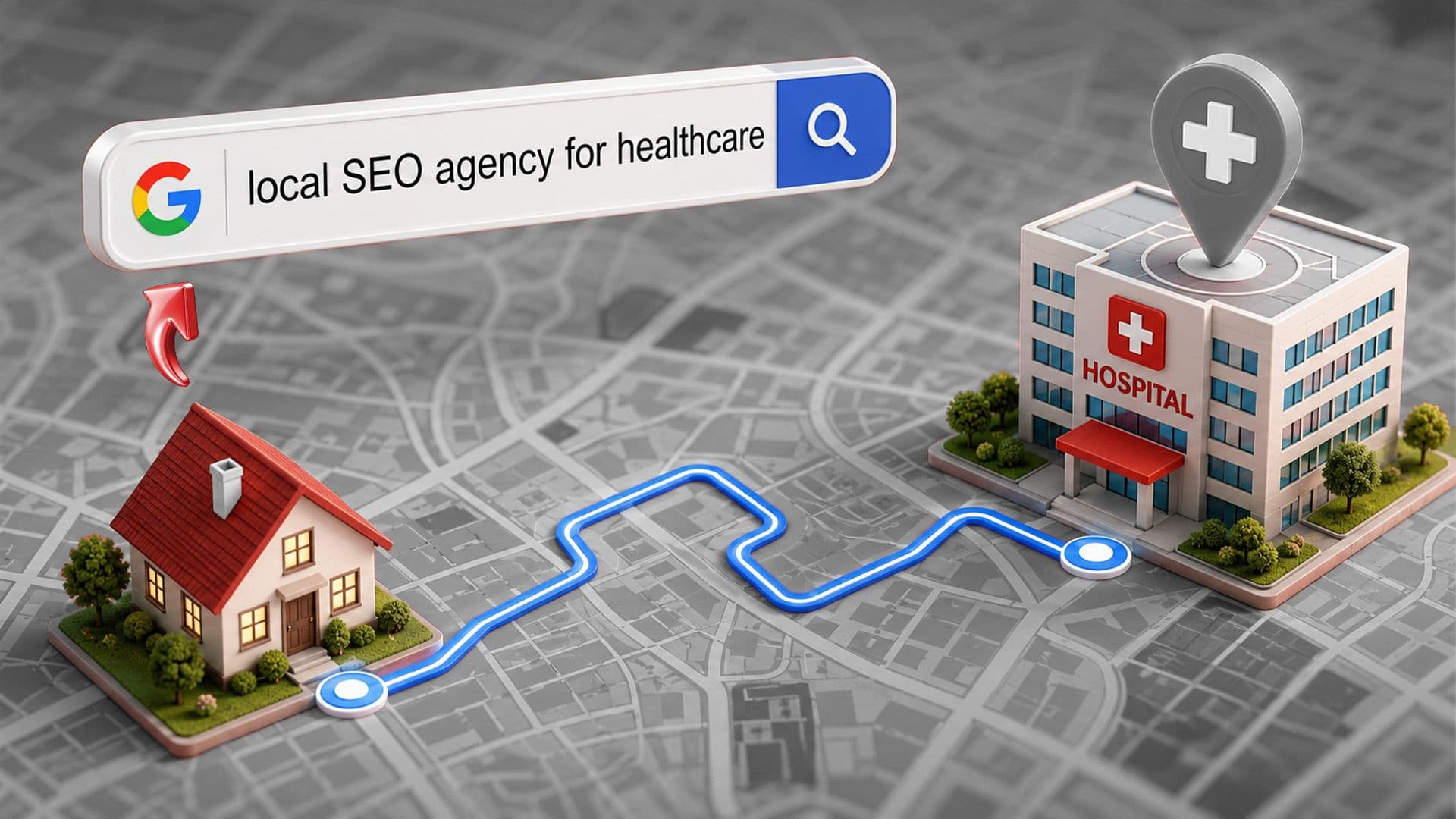
That’s the uncomfortable truth about modern healthcare marketing. The good news is it’s fixable.
This guide shows you how to pick the right local SEO agency for healthcare, not just anyone with a shiny website. Look for an agency that places your practice right in front of real patients who are already searching for your services. That part matters a lot.
Key Takeaways
- Choose agencies familiar with HIPAA, E-E-A-T, and healthcare compliance.
- Google Business Profile is key to local “near me” visibility.
- Patient reviews impact trust and clicks.
- AI overviews and voice search are reshaping provider searches.
- Hospitals and multi-location clinics need advanced technical SEO.
- Focus reporting on calls, appointments, and new patients.
Why Healthcare SEO Is Different From Other Industries
Healthcare ends up under Google’s “Your Money or Your Life” (YMYL) topic; that means tighter expectations for accuracy, expertise, and trust.
People are looking fast, often in stress or with that kind of vulnerability, so how you rank really leans on credentials, genuine reviews, and location signals.
A generic SEO plan that works for retail, or maybe a tech product page, doesn’t quite carry over to medical practices, clinics, or hospitals.
Core Criteria for Evaluating the Right Local SEO Agency for Healthcare
Choosing a healthcare local SEO agency requires more than comparing rankings or monthly packages. Here’s a detailed guide:
1. Proven Experience With Medical/Healthcare Clients Specifically
Healthcare SEO has these unique needs about patient trust, delicate information, medical phrasing, and overall search quality.
A healthcare-experienced agency gets those industry-specific details, not just the big picture. They can craft compliant, genuinely helpful SEO strategies for healthcare companies, not some templated thing.
Honestly, this is far stronger than just taking generic tactics from retail or e-commerce and trying to force them in. Sometimes it works in theory, but in practice it’s usually not.
Look for evidence of:
- Previous healthcare or medical SEO campaigns
- Relevant case studies and measurable results
- Experience with practices, clinics, hospitals, or healthcare networks similar to yours
Look for proven outcomes, not a list of services. Vague responses often suggest a generic SEO approach.
2. E-E-A-T Fluency
E-E-A-T—Experience, Expertise, Authoritativeness, and Trustworthiness—is really crucial for healthcare content. People are basically depending on this kind of info to make actual health decisions, not just a quick guess.
Your agency should show real medical know-how, with correct content, qualified authors, and references that feel credible and well-founded. It needs to build credibility while keeping every claim accurate and supported.
A Useful Test:
Ask the agency to review one of your existing pages and point out where trust signals are missing. Their answer shows whether they truly understand medical content standards. Or simply use “E-E-A-T” without a real process behind it.
3. Local SEO Fundamentals Done Right
Strong local SEO begins when your business details stay accurate and consistent everywhere on your site, plus across local directories.
The agency should also work on your Google Business Profile, the location pages, citations, and those on-page bits that matter.
They might even help generate locally meaningful content that matches what patients are actually looking for through real searches in your area.
Key areas include:
- Google Business Profile optimization
- Local keyword targeting
- Location-specific landing pages
- Citation consistency across trusted directories
- Local link acquisition
Treat this as ongoing work, not a one-time setup, really. Keep listings and citations on the move with new services, holiday hours, and fresh photos as they come in.
Regular updates help maintain a competitive local presence over time, and it adds up.
4. Technical SEO Capability for Complex Sites
Healthcare websites can be sort of complex, like you know, multiple locations, practitioners, specialties, services, appointment systems, and also those big content libraries.
Technical SEO should cover crawlability, indexing, site architecture, structured data, Core Web Vitals, redirects, and canonicalization. Your agency should also fix duplicate content carefully so important patient journeys remain unaffected.
Large healthcare sites carry hidden technical risk. Like, a single broken redirect or duplicate provider page can quietly affect rankings across multiple locations. Look for agencies that audit your site regularly, not only at the start.
5. Reputation and Review Management
Reviews influence how prospective patients evaluate healthcare providers before contacting them. A good agency should put together a strategy that can actually last, not just a short burst.
It should nudge folks toward real feedback while also staying in line with each platform's privacy requirements too. Then it needs to keep an eye on reputation momentum and flag any recurring concerns that keep showing up.
Pay close attention to the way an agency plans to handle sensitive cases, like a negative review that risks revealing protected health information. Their approach here says a lot about how carefully they’ll protect your practice’s reputation over the long run, even when things get a bit messy.
6. Scalability to Match Your Practice Size
Your SEO requirements should change as your healthcare organization keeps expanding. A single-location practice really needs focused local optimization. Multi-location groups often need scalable location pages, listings, content processes, and reporting.
You should work with an agency that grows alongside your providers, services, locations, and markets, not just for today but for what comes next.
Also think about what happens, day to day, as you grow. Like, will the same strategist stay on your account, or does scaling basically mean you get moved to a bigger, less attentive crew? Growth should make your results sharper, not dilute the focus your practice gets.
7. Readiness for AI-Driven Search
Patients increasingly stumble on healthcare information via AI-generated answers and also through the usual search results.
So, your agency should understand how content can still stay useful and findable across these AI-powered search setups. Try to build topical authority by directly and clearly responding to patient questions, then support entity signals in a stronger way.
Also, keep the information accurate, and make genuinely valuable content, not just some algorithmic shortcuts or quick tricks. This shift also raises the bar on accuracy.
AI-generated summaries pull directly from your site's content, so outdated or misleading information can get amplified rather than buried. An agency prepared for this reality builds fact-checking and regular content refreshes into their process, not just initial publishing.
8. Transparent Reporting Tied to Real Outcomes, Not Vanity Metrics
Your SEO reports should focus on business impact, not just rankings and impressions. Look for clear connections between SEO efforts, qualified calls, appointment requests, and conversions. It should also track location-based visibility and other outcomes that matter to your practice.
Also ask how often you'll actually talk to a human about these numbers. A monthly report without context is less useful than a short call explaining what changed and why. It should also clearly outline what’s planned next. Reporting should inform decisions, not just fill an inbox.
Cost vs. Value: What Should You Expect to Pay?
Monthly healthcare local SEO costs range from hundreds to thousands of dollars. Your investment depends on practice size, competition, market, and services needed.
Solo providers usually need simpler strategies and lower budgets. Multi-location clinics and hospitals need more investment in content, technical SEO, and reputation management.
Price shouldn’t be the only factor. Compare each agency’s fees with its strategy support, content volume, review outreach, and reporting. A slightly higher cost may generate better long-term patient results.
Local SEO Agency vs. General SEO Agency for Healthcare
Not every SEO provider is built for medical practices. Here's how a specialized local SEO agency for healthcare compares to a general SEO agency across the factors that matter most.
| Factor | Local Healthcare SEO Agency | General SEO Agency |
|---|---|---|
| Industry Compliance Knowledge | Understands HIPAA and Medical Advertising Rules | Often Unaware of Healthcare-Specific Rules |
| E-E-A-T Expertise | Built Into Every Content Strategy | Rarely Prioritized |
| Google Business Profile Handling | Specialized, Location-Focused | Basic, Generic Setup |
| Review Management | Active, Ongoing Strategy | Occasional or Ignored |
| Content Approach | Medically Accurate, Patient-Focused | Generic, Broad Topic Content |
| Reporting | Tied to Patient Calls and Bookings | Focused on Traffic and Rankings Only |
Red Flags to Watch For
Not every agency delivers what it promises. Spot these red flags before you commit.
- Guarantees of "#1 ranking" in a fixed timeframe.
- No healthcare portfolio or case studies to show.
- Vague reporting with no call or booking tracking.
- Using outdated tactics like keyword stuffing or spammy backlinks.
- No clear plan for Google Business Profile or reviews.
- Unwillingness to explain their strategy in plain language.
Questions to Ask Before Signing
The right questions can expose an agency’s strengths and expertise. Ask these before signing any agreement.
- Can you show results from other healthcare or medical clients?
- How do you handle HIPAA and compliance in content?
- What's your process for managing negative reviews?
- How do you measure success, like calls, bookings, or just traffic?
- Do you optimize for AI search tools and voice search?
- What happens if rankings drop after an algorithm update?
A Quick Evaluation Checklist
Compare agencies using this simple checklist. Choose the one that best fits your needs.
- Verified healthcare or medical client experience.
- Strong understanding of EEAT and YMYL guidelines.
- Proven local SEO and Google Business Profile strategy.
- Technical SEO skills for larger, complex websites.
- Active review and reputation management.
- Scalable services matching your practice size.
- AI search readiness and modern optimization tactics.
- Transparent, outcome-based reporting.
Conclusion
Picking the right local SEO agency for healthcare really isn’t only a marketing choice. It can determine how many patients discover your practice and choose to trust it.
So try to prioritize actual healthcare experience, strong compliance awareness, and results you can measure, not slick talk and shiny deliverables.
The right partner usually treats your rankings as a tool, not a trophy. Focus on more patients through the door, not impressive charts in monthly reports.

Usama Shareef
Usama Shareef is the COO of Mahraj Technologies, bringing strong expertise in SEO content writing, software QA, and development testing. He specializes in delivering high-quality digital solutions with a focus on performance, accuracy, and scalable growth